







Which vest fits which temperature? Between 10 and 15 degrees, a quilted or puffer vest is a good outer layer for many women and men—provided wind, moisture, movement, and the layer underneath are suitable. At 15 to 18 degrees, a lighter vest over a T‑shirt or long sleeve is often sufficient.
Between 5 and 10 degrees you need more insulation, a warming layer, and possibly weather protection. Below 5 degrees a closed jacket is usually more sensible; the vest can then serve as a midlayer. This guide shows you, at what temperatures a vest works, when a hoodie or knit should be worn underneath, and at what point a jacket is the better choice. The indications are deliberate orientations and not a guarantee of warmth.
The quick answer: From when can you put on a vest?
As a flexible layering piece, a vest plays its greatest strength in transitional seasons. It keeps the torso warmer, leaves the arms free, and can be opened or taken off more quickly than a closed jacket. The North Face describes vests accordingly as an additional insulating layer that preserves mobility and can be worn both over and under a jacket.
As a practical everyday guideline:
- 15 to 18 degrees: light quilted vest over T‑shirt or long sleeve.
- 10 to 15 degrees: thin to medium insulation over sweatshirt, hoodie, or knit.
- 5 to 10 degrees: thicker puffer vest with a warm layer; with wind and little movement, rather a jacket.
- 0 to 5 degrees: vest only with higher activity or as an additional layer.
- Below 0 degrees: do not plan it as the sole outer layer; wear a suitable winter jacket over it.
Bergzeit names a light vest as a possible layer at 15 to 18 degrees, fleece plus vest at 12 to 14 degrees, and at 5 to 10 degrees a vest mainly within active layering systems. Nike explicitly lists a medium insulated quilted vest as an option around 10 degrees. These recommendations are not a universal formula, however. Two people can perceive the same temperature completely differently.
If you want to compare not only vests but also leather, transitional, and winter jackets, use our overarching guide “Which jacket at which temperature?”. The following guide deliberately stays focused on quilted vests.
Why the temperature alone doesn’t decide
Air temperature is only part of the decision. A vest that feels comfortable at sunny 10 degrees while walking briskly can be too cool at the same 10 degrees in wind. Bergzeit explicitly points out that individual cold sensitivity, movement, and weather conditions influence appropriate clothing.
Movement and standing still
When walking quickly, cycling, or moving through the city, your body produces more heat. A sleeveless outer layer can then be sufficient because excess heat can escape more easily via the arms. If you wait a long time at a stop or sit outdoors, that additional heat production is missing. In that case choose a thicker layer or a closed jacket.
Wind and moisture
Wind can quickly turn the advantage of free arms into a disadvantage. A quilted vest protects the torso but not the sleeves of the hoodie or jumper. If the base layer becomes wet, the body cools more easily. A hood provides extra protection for the head but does not automatically make the vest waterproof or windproof. In rain and strong wind, an appropriate outer layer should be part of your planning.
Personal cold sensitivity
People who get cold quickly often need a jacket or thicker insulation earlier. Sleep, exhaustion, daily condition, and length of stay can additionally change perception. Rigid statements like “At 7 °C a puffer vest is always enough” would therefore be unreliable.
Layers and insulation
A T‑shirt, long sleeve, hoodie, and wool sweater provide completely different levels of warmth. Likewise, vests vary between thin and thick insulation. The same temperature can, depending on the combination, result in a mild transitional outfit or a significantly warmer layering system.
Vest at 15 to 18 degrees: light layering
At 15 to 18 degrees a light vest makes sense especially in the morning, evening, and with changing cloud cover. Bergzeit lists light, flexible layers for this range and cites a vest as a possible addition in a layered look. In the sun it can quickly become too warm; worn open the temperature is easier to regulate.
For women a thinner quilted vest works over a T‑shirt, long sleeve, or lightweight blouse. Straight‑leg jeans, trousers, or a skirt keep the outfit balanced. For men a T‑shirt, thin sweatshirt, or light shirt pairs with jeans and sneakers. A matte black surface looks subdued, while sheen makes the vest more of a focal point.
In this temperature range pay attention to flexibility. If you no longer need the vest, it should be easy to carry or stow. A heavily padded puffer vest can become too warm at 17 or 18 degrees, especially with activity and direct sun.
A possible outfit consists of:
- T‑shirt or thin long sleeve,
- lightly insulated vest,
- jeans or breathable trousers,
- sneakers or lightweight boots.
In windy weather a long sleeve can be more comfortable than a T‑shirt. If it starts to rain, a water‑appropriate jacket is more reliable. The vest remains a flexible companion in this range, not the answer to every weather.
Vest at 10 to 15 degrees: the ideal transitional range
Between 10 and 15 degrees a quilted or puffer vest can play its role particularly well. Around 12 to 14 degrees Bergzeit recommends, among other things, a long‑sleeve or fleece layer with a vest or thin insulation layer. The torso gets warmth while the arms remain mobile.
At 14 or 15 degrees many people find a long sleeve, sweatshirt, or thin knit under a lighter vest sufficient. At 10 to 12 degrees a hoodie or warmer knit becomes more sensible. Those who move a lot can wear the vest open and close it during breaks.
For women, a matte hooded vest over a turtleneck and straight jeans is a calm combination. A shiny, thicker variant goes with a plain long sleeve and dark boots. Men can wear a puffer vest over a hoodie or fine knit with jeans, chinos or cargo pants.
Nike explicitly names a medium-weight, insulated quilted vest as a clothing option around 10 degrees and pairs it with long sleeves or sweaters. That confirms the range as a versatile layering piece, but it still depends on the product, activity and weather.
If you are looking for the concrete outfit proportions, suitable trousers and differences between puffer and quilted variants, you will find them in the Pillar "How to style vests: Puffer vest & quilted vest 2026".
Vest at 5 to 10 degrees: More padding and weather protection
At 5 to 10 degrees the vest shifts from an uncomplicated transitional layer to a deliberate layering system. A thicker puffer vest over a hoodie, fleece or warm knit can be comfortable during activity. With little activity, strong wind or moisture, a closed jacket is often the more sensible choice.
Bergzeit describes for 5 to 10 degrees long-sleeved base layers, warming midlayers and an insulating outer layer. There a vest is mentioned especially for higher levels of movement or together with an outer protective layer. This exact limitation is important: free arms increase ventilation but offer less protection.
For women, a heavily padded, shiny puffer vest over a close-fitting turtleneck and a warm hoodie can work. Make sure the armhole does not pull. Men combine a sturdier vest with a heavier sweatshirt, flannel or knit. A beanie and warm shoes can noticeably change the comfort.
At 8 to 10 degrees and sunshine a vest is often still very practical. At 5 or 6 degrees in the shade, with wind and long periods of standing still you should rather reach for a jacket. This applies especially for commuting routes, outdoor events and evenings when the temperature continues to fall.
A vest in this range should:
- be sufficiently padded at the torso,
- close over the warm layer without pulling,
- have an easy-to-operate front zipper,
- offer pockets for hands or small items,
- fit under another layer if needed.
The trueprodigy models rely on hand-filled synthetic padding and SBS branded zippers. How warm you feel still depends on fill amount, top, weather and movement.
Vest at 0 to 5 degrees: Use only selectively
Between 0 and 5 degrees a vest as the sole outer layer is too cool for many people. During sporting activity a well-insulated variant with a warm base layer can work. In normal city life, with little movement or wind a winter jacket protects the arms and the entire upper body more reliably.
Bergzeit recommends around 0 degrees a thick insulation layer and names a light insulated vest mainly as a midlayer under a weatherproof outer layer. This classification also fits fashion vests: use the sleeveless jacket under a more loosely cut coat or a winter jacket if there is enough room to move.
For women a less voluminous quilted vest under a coat can provide additional torso warmth. Men use a thinner vest under a parka or roomy jacket. A very thick puffer vest is often impractical as a midlayer because it is compressed under the outer layer and can restrict movement.
If the vest is to be worn on the outside, check the following questions:
- Are you moving continuously?
- Will it remain dry and low-wind?
- Are you wearing warm knit or fleece underneath?
- Do you have a jacket for breaks or falling temperatures?
- Are head, hands and feet sufficiently protected?
If several answers are “no”, a closed jacket is the better decision. The Winter Jacket Style Guide shows you how to combine the warmer outer layer appropriately.
Below 0 degrees: Vest as midlayer instead of outer layer
Below freezing a puffer or quilted vest should not be planned as the only outer warming layer in everyday life. Arms, shoulders and sides require a closed protection. Wind, snow and longer stays outside increase the demands further.
As a midlayer a thinner vest can still make sense. It complements the insulation at the torso without burdening the arms with a second thick sleeved layer. The prerequisite is a suitable winter jacket over it. The outer layer must provide enough space so that the padding is not strongly compressed.
A practical order is:
- close-fitting long sleeve or thermo layer,
- sweater, fleece or thin insulated vest,
- wind- and weather-appropriate winter jacket,
- beanie, scarf, gloves and suitable shoes.
With high activity the system can be lighter. When standing still or with pronounced cold sensitivity you need more insulation. Do not rely on the temperature display alone.
trueprodigy uses hand-filled synthetic padding instead of down in vests and winter jackets. If you want to go deeper into the material side, our article on the Winter Jacket Without Down explains the most important differences and care aspects.
Thin or thick puffer vest: Which suits your everyday life?
The right amount of padding determines in which temperature range a vest remains practical. Thinner models react more flexibly to changing conditions. They fit under another jacket, feel less warm indoors and are easier to wear open. Thicker puffer vests store more heat at the torso and add more visual volume.
Choose a thinner quilted vest if you:
- mainly wear it at 12 to 18 degrees,
- frequently move between indoor and outdoor spaces,
- want to use it under a coat or jacket,
- prefer fine knit, shirt or blouse.
A thicker puffer vest is more suitable if you:
- want to use it as an outer layer at 5 to 12 degrees,
- wear hoodies and heavier sweaters underneath,
- if you want more visible volume,
- move regularly outdoors.
Surface and collar do not automatically change the temperature range. A shiny vest is not warmer than a matte one just because of the finish. A hood and high collar can add comfort, but they do not replace sufficient filling or closed sleeves.
If instead of the warmth rating you want to know which surfaces, silhouettes and collar shapes are currently in demand, read our separate guide to the puffer and quilted vest trends 2026.
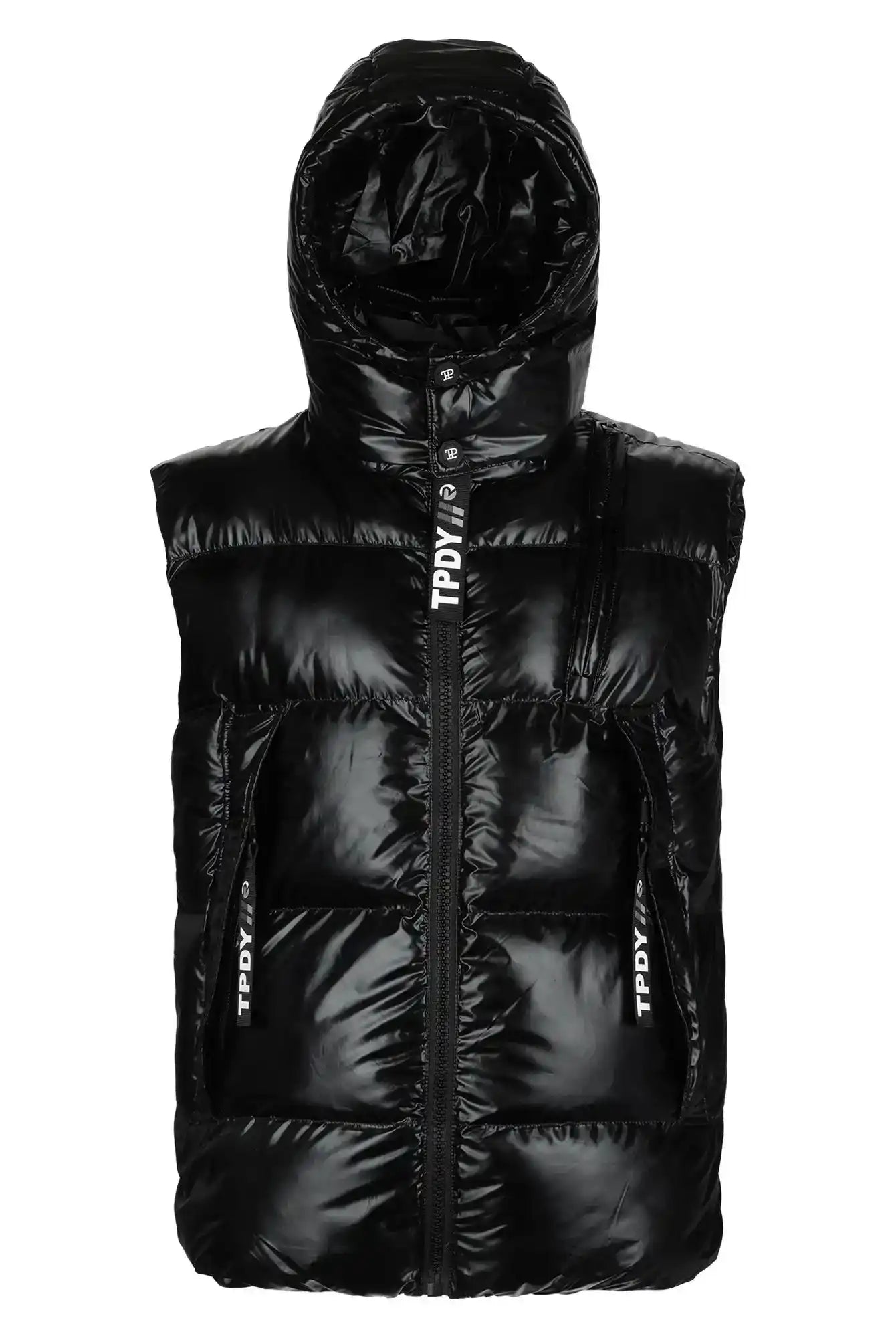
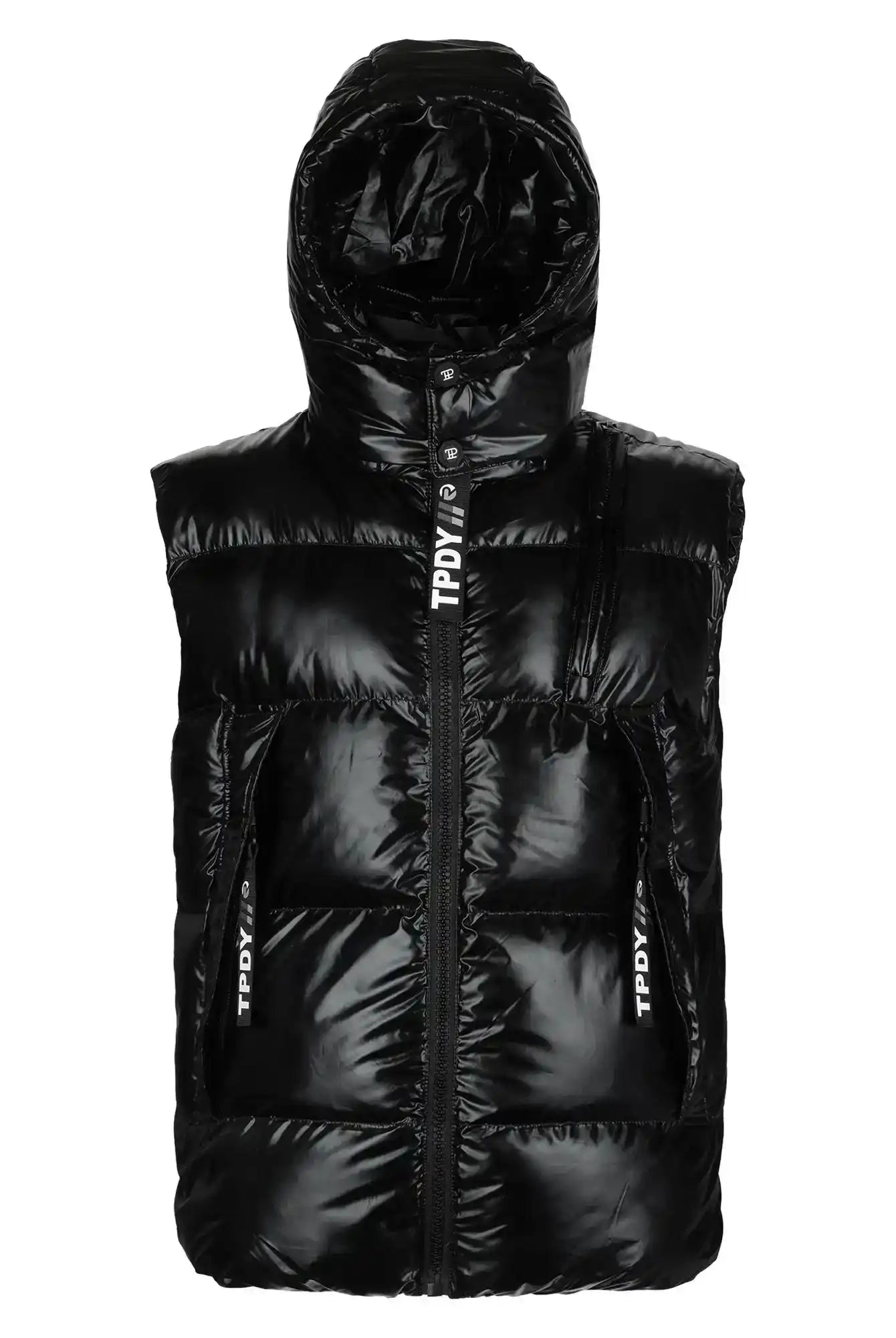
The current women's vests and men's vests by trueprodigy show matte and shiny black models as well as different collar and padding directions. Always check the description of the specific product.
What do women and men wear under the vest?
Temperature determines the layer, but women and men can use the same basic logic. In mild weather thin tops are enough; as temperatures drop, material weight and weather protection increase.
Layering for women
At 15 to 18 degrees a T‑shirt, long sleeve shirt or lightweight blouse fits. Between 10 and 15 degrees a sweatshirt, turtleneck and thin knit work. At 5 to 10 degrees you often need a hoodie, fleece or a warmer sweater. Under 5 degrees the vest becomes an extra layer under a jacket.
A shiny puffer vest creates a clear accent over a calm black turtleneck. A matte variant can be worn more discreetly with knitwear and dress trousers. Make sure sleeves and armholes do not press against each other.
Layering for men
Men can wear a T‑shirt, long sleeve or shirt in mild temperatures. In the ideal transition range a hoodie, sweatshirt and fine knit are suitable partners. At 5 to 10 degrees a heavier hoodie, fleece or flannel becomes sensible. If temperatures fall further, a closed outer layer belongs on top.
A stand-up collar lets a hoodie’s hood fall freely. A vest with its own hood works especially well with crewneck sweat or knit. With two hoods one should lie flat so there is no unnecessary bulk at the neck.
Why activity matters more than gender
Women and men are not distinguished by a fixed temperature rule. Cold sensitivity, body, activity and layering are more individual than the target group label. The gender sections therefore serve outfit context, not a blanket statement about warmth.
Common mistakes when choosing a vest by temperature
The most common mistake is treating a single degree value as a fixed clothing instruction. Weather and everyday life are more complex. Avoid these decisions:
Only looking at the daily high: It can be significantly cooler in the morning and evening. Check the progression and take an extra layer if necessary.
Ignoring wind and rain: A padded fashion vest is not automatically wind- or waterproof. Wet sleeves and strong wind can quickly change comfort.
Wearing something too thick under something too tight: A voluminous hoodie under a snug vest compresses the padding and restricts movement. Try the complete layering on together.
Planning for both standing still and moving: An outfit for brisk walking can be too cool when waiting for a long time. Plan according to the quietest phase of your day.
Equating a thick vest with a winter jacket: Free arms remain free arms. Under 5 degrees a closed jacket is the better outer layer in many situations.
Overlooking care and material: A vest can only keep its shape if it is treated according to the care label. For polyester shells, synthetic padding, zippers and drying, always check the specific model’s instructions first.
Conclusion: Choosing the right vest by temperature
A vest is primarily a strong outer layer between 10 and 15 degrees. At 15 to 18 degrees lightweight models and thin layers are enough. Between 5 and 10 degrees you need more padding, warmer tops and a plan for wind or rain. Under 5 degrees a closed jacket is usually the better outer layer; the vest can provide extra torso warmth.
Women and men should not decide only by degrees. Movement, duration of stay, cold sensitivity, wetness and layering change the right choice. Thin or heavily padded, matte or shiny, and hood or stand-up collar influence use and style.
Discover now the women's vests and men's vests by trueprodigy and find the model that suits your weather and your layering.
FAQ: Vest at 5, 10 or 15 degrees
At what temperature do you put on a vest? For many people a padded vest works best between about 10 and 15 degrees. Lightweight models also fit at 15 to 18 degrees. Under 10 degrees padding, layers, wind and movement determine whether a jacket makes more sense.
Can you wear a vest at 15 degrees? Yes. At 15 degrees a lightweight quilted vest over a T‑shirt, long sleeve or thin sweatshirt is often enough. In sun and while active you can wear it open. In wind or rain you may need additional protection.
Is a quilted vest enough at 10 degrees? A medium quilted or puffer vest can be sufficient at 10 degrees over a hoodie, fleece or sweater, especially when active. When standing still, in strong wind or wet conditions a closed transitional jacket is often more comfortable.
Can you wear a puffer vest at 5 degrees? At 5 degrees a thicker puffer vest works better during continuous movement and with a warm layer. For longer periods of standing still or windy weather you should choose a closed jacket or wear the vest as a midlayer.
Does a vest keep you warm in winter? It mainly warms the torso and leaves the arms free. On mild winter days or during activity that can be enough. In freezing conditions a thinner vest is better used as an additional insulating layer under a suitable winter jacket.
What do you wear under a vest in cold weather? Depending on temperature a long sleeve, hoodie, fleece, turtleneck or warm knit is suitable. The top should provide warmth without pulling under the armholes. In wet and windy conditions an appropriate outer layer belongs on top.
When is a jacket better than a vest? A jacket is usually better when it drops below 5 degrees, is very windy, raining or you stand still for a long time. It fully protects arms and shoulders. Personal cold sensitivity and activity remain decisive.